Zero Friction = Zero Assurance: The Case for eID Caller Authentication
By Daniel Gniazdo on 20 April 2026

When interacting with customers, businesses generally want as little friction as possible.
This is especially true for call centers, where increasing customer satisfaction and reducing call duration are often explicit targets.
But eliminating all friction on a call would technically require skipping any form of identity verification. Clearly, that would be a terrible idea on sensitive or high-risk calls.
So the real question is: How do you strike a balance between friction and trust?
Let’s see why eID caller authentication may just be the answer.
Why call centers try to reduce friction
The job of a call center agent is to resolve the customer’s problem as quickly and efficiently as possible.
As such, it’s no surprise that many call center KPIs and metrics focus on reducing handling time and increasing customer satisfaction. Here are just a few examples:
- Average Handling Time (AHT): How long does it take agents to handle a customer call?
- Cost Per Call (CPC): What does an average customer call cost the company?
- Customer Effort Score (CES): How much effort does the call require from the callers themselves?
- Customer Satisfaction (CSAT): How satisfied is the customer with the interaction?
These metrics put understandable pressure on call centers to keep calls short and make them frictionless for customers.
The problem with zero friction
Taken to the extreme, trying to minimize friction may undermine efforts to reduce fraud and keep calls secure.
A call center might be tempted to do only minimal caller identity verification or stop doing it altogether. After all, asking customers security questions or making them check their inbox for a one-time password is bad news for “time-on-call” and “customer effort” metrics.
But identity verification isn’t exactly a nice-to-have step. It’s critical for making sure the caller is who they claim to be. In some cases, robust caller verification is also a regulatory requirement as part of know-your-customer laws.
In short, removing all friction should rarely be your only priority.
So, how much friction is okay, then?
Legible friction = acceptable friction
The truth is, your customers may be perfectly fine with a bit of friction, as long as they can understand its benefits and the reasons behind it.
In fact, callers likely even expect a degree of friction when it comes to identity verification, because they know that the alternative is an impersonator potentially gaining easy access to their accounts, finances, or sensitive personal information.
Seen in this light, friction actually introduces trust into the process.
As this CX Today article puts it:
“The real tradeoff isn’t friction versus experience. It’s harm versus trust.”
That’s why your goal isn’t to remove all friction, but to make it clear why friction exists and how it builds trust on both ends of the call. The article calls this “legible friction” and argues that it’s a much better target than “zero friction.”
With that in mind, you need to find the right balance between security, trust, and friction.
And eID-based caller authentication may just be the way to do exactly that.
eID caller authentication: the best of both worlds
There are many different ways to verify a caller’s identity.
In most cases, there’s a natural trade-off between customer experience, verification speed, and level of security.
For instance, asking someone for their national ID number is easy and quick, but it’s highly insecure. National ID numbers are often leaked and can be overheard or exposed in a myriad of different ways. That’s why national ID numbers are great for identifying a customer but not for verifying them.
One-time passwords, on the other hand, are more secure, but callers have to first wait for a password to show up via SMS or email, hunt for it in their inbox, and then type it in while on call, which doesn’t exactly do wonders for speed or user experience.
Caller authentication via eIDs is different: It lets companies verify customers securely and with little added friction.
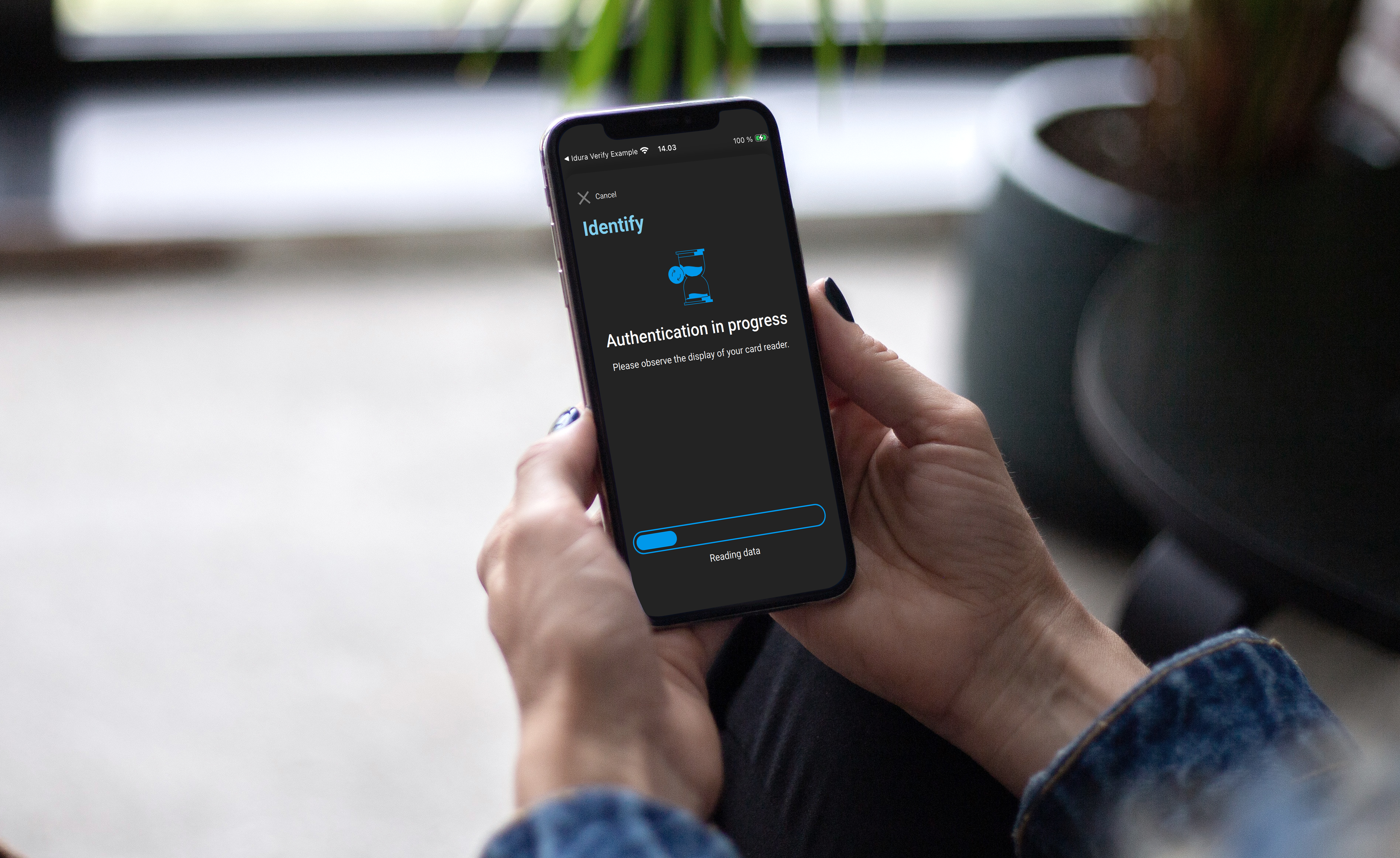
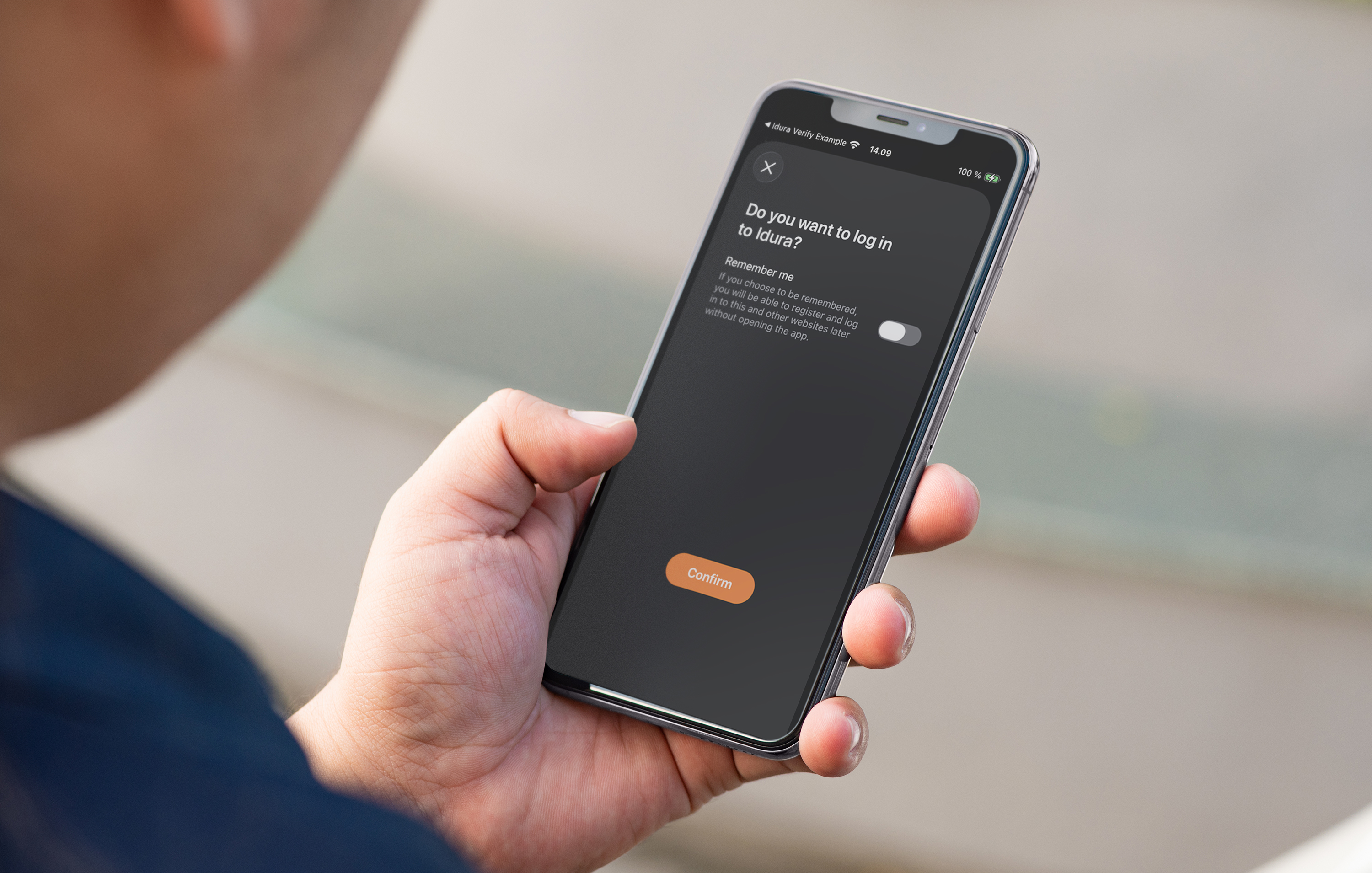
That’s because this approach relies on national eID apps that most citizens already regularly use. The process is straightforward:
- The call center agent triggers the authentication request.
- The caller receives the request in their eID app and verifies on their device.
- The agent sees the verified status, and the call continues.
While it’s not completely effortless, eID caller authentication arguably offers the best balance between trust and friction:
Voice biometrics is a close second, but it’s increasingly vulnerable to AI deepfakes and requires more effort to implement.
eID caller authentication is also the only verification method that lets companies verify brand-new callers, because it doesn’t rely on existing customer records.
So if your goal is legible friction instead of zero friction, eID-based caller authentication truly gives you the best of both worlds.
Frequently asked questions about Caller Authentication
Caller authentication with eID is a method of verifying a caller’s identity using national electronic identities such as BankID or MitID. Instead of answering security questions or sharing personal information, the caller confirms their identity directly in their eID app on their own device. This creates a more secure and user-friendly authentication experience for both organizations and customers.
Contact centers aim to reduce friction to improve customer satisfaction and shorten call handling times. However, reducing verification too much can increase the risk of fraud and unauthorized access to sensitive information. eID-based caller authentication helps organizations maintain strong security while keeping the customer experience smooth and efficient.
Security questions rely on information that may be publicly available or known by others. eID authentication uses a strong digital identity that is tied to the individual and verified on their personal device. This significantly reduces the risk of identity theft, social engineering, and other types of fraud.
Yes. Unlike many traditional verification methods, eID-based caller authentication does not require the organization to have existing customer records. This makes it possible to securely verify both existing customers and completely new callers.
Not necessarily. Many customers expect some level of identity verification when contacting banks, insurers, healthcare providers, or other organizations handling sensitive information. When authentication is performed through familiar eID solutions, the process often feels both natural and trustworthy.
eID-based caller authentication can reduce fraud risk, eliminate the need for security questions, and speed up identity verification. It also provides stronger audit trails and better documentation of the authentication process. The result is increased trust, stronger security, and more efficient customer interactions.
Methods such as security questions, PIN codes, and national ID numbers are increasingly vulnerable to data breaches, social engineering, and other fraud techniques. At the same time, AI-powered tools have made sophisticated attacks, including voice cloning, easier to execute. As a result, many organizations are turning to more robust and future-proof eID-based authentication solutions.
Ready to make your service calls safer and simpler?
Caller authentication is already available with Norwegian and Swedish BankID, with the Danish MitID coming soon.
Start testing for free today or contact our sales team to learn more.
-2.png)