Caller Authentication vs. Other Verification Methods
By Daniel Gniazdo on 30 March 2026
Caller authentication via eIDs is a highly secure, fraud-resistant, and user-friendly way for companies to verify someone’s identity on the phone.
But it is far from the only one.
There are several traditional and emerging methods of identity verification, each with its strengths and weaknesses.
Let’s take a look at the most popular options and compare them to eID caller authentication.
What are the main ways to verify a caller’s identity?
While a company could come up with its own custom process for caller verification, the standard options are:
- Security questions: The call center agent asks the caller to give the right answer to a stored personal “secret” (for instance, the name of their first pet).
- PINs or passcodes: The caller enters a predefined PIN via the keypad on their phone, either in response to an agent request or an IVR prompt.
- National ID numbers: In this case, the caller simply types in their national ID number while waiting for an agent.
- One-time passwords (OTPs): The caller receives a system-generated one-off code via email or SMS and enters it to complete the verification.
- Voice biometrics: The system matches a caller’s voice pattern to a stored voiceprint to verify their identity.
All of these methods rely on matching a caller’s input to an existing customer record.
eID-based caller authentication uses a fundamentally different approach.
How eID caller authentication works
eID-based caller authentication relies on national eID apps that most citizens already use.
Here’s how the process looks:
- The agent triggers the authentication request.
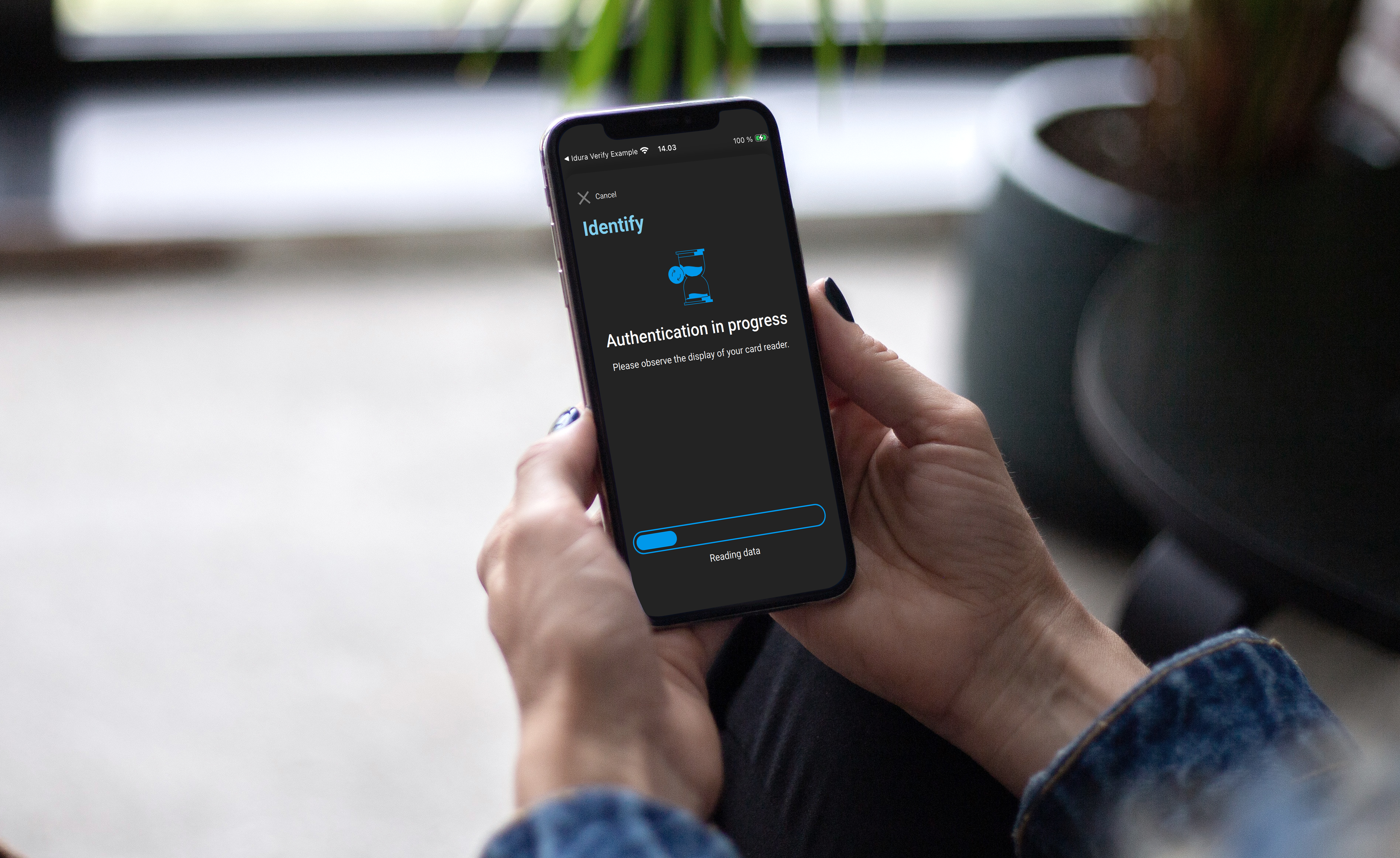
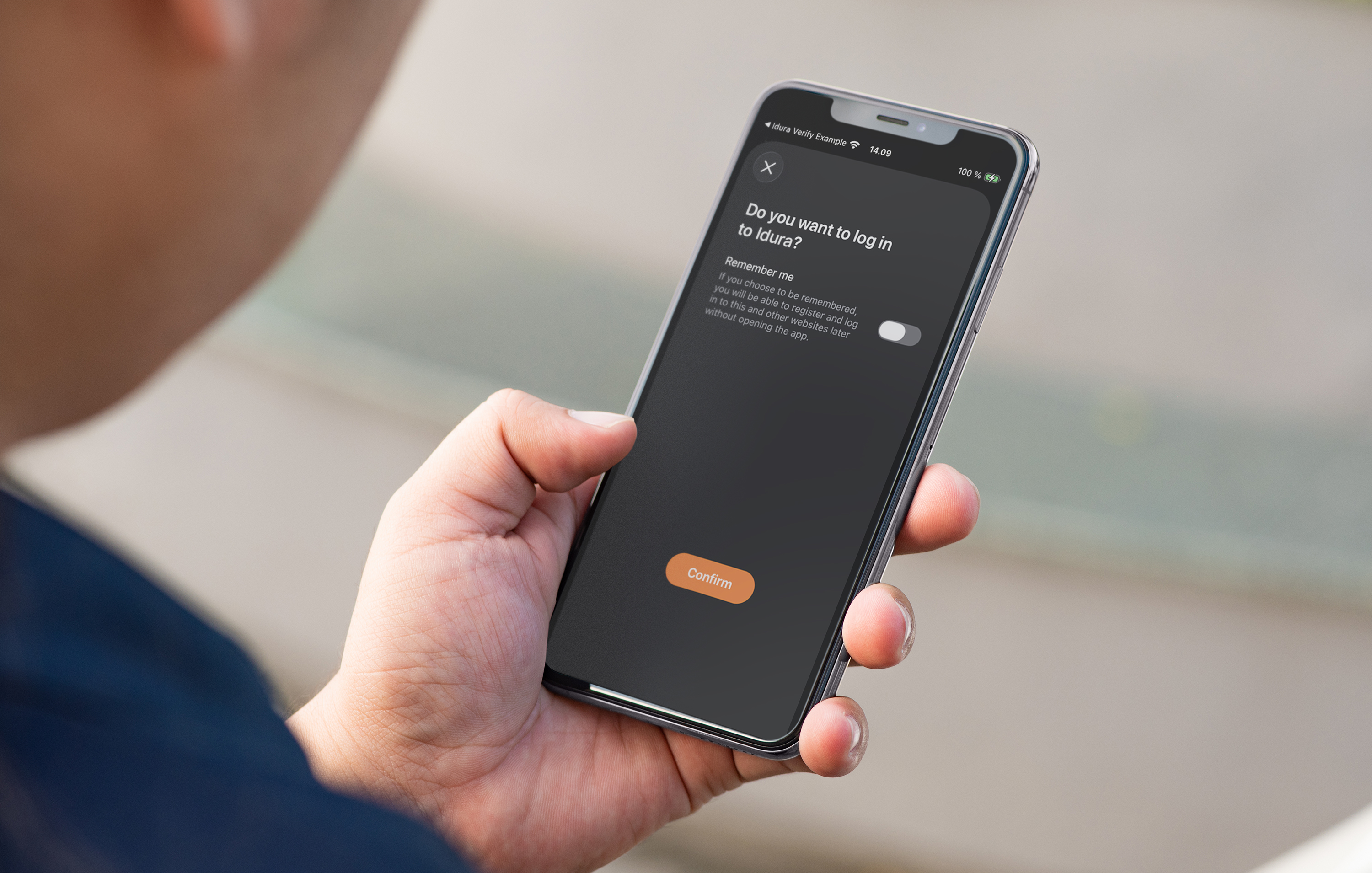
- The caller receives the request in their eID app and verifies on their device.
- The agent sees the verified status, and the call continues.
It’s familiar, straightforward, and robust.
For a more comprehensive look, read: “How Exactly Does Caller Authentication Work?”
Caller authentication vs. other methods: Side-by-side
Here’s a top-level comparison of eID caller authentication against the rest:
eID caller authentication wins on every critical dimension, like security, fraud resistance, and verification speed. It might not be quite as effortless for the customer as voice biometrics, but for anyone with access to a national eID, it’s a familiar and trusted way to verify their identity.
Finally, eID-based caller authentication is the only method that lets companies verify callers who aren’t already customers, because it doesn’t rely on existing customer records. Instead, it uses a caller’s own eID app and credentials.
For a detailed comparison, consult the individual articles:
- Caller Authentication vs. Security Questions
- Caller Authentication vs. National ID Numbers
- Caller Authentication vs. One-Time Passwords
- Caller Authentication vs. PINs
- Caller Authentication vs. Voice Biometrics
Why eID caller authentication is a smart choice
Every verification method comes with unique risks and challenges.
Knowledge-based authentication options like security questions and PINs are highly vulnerable to fraud and considered outdated. National ID numbers are quick to type in but offer no inherent proof of identity. One-time passwords are more robust, but they introduce additional friction while being susceptible to fraud via SIM swapping and compromised inboxes. Voice biometrics used to be a highly secure and friction-free alternative, but the rise of voice cloning and AI deepfakes is rendering it far less reliable.
That’s why eID caller authentication is growing in popularity and relevance. It addresses the weaknesses of the other methods without complicating the process for the end user. Anyone already using eID for logins and verification will know exactly how it works.
All of this makes eID caller authentication a highly secure, trustworthy, and future-proof choice for any company that needs to verify callers.
To learn more about its advantages, read “6 Business Benefits of Caller Authentication.”
FAQ about Caller Authentication
Traditional security questions rely on information the customer knows or can provide, such as a date of birth, address, or customer number. Caller authentication with eID verifies the person's identity directly through a trusted digital identity. This provides a stronger security model and reduces the risk of unauthorized access to sensitive information. At the same time, the authentication process becomes easier for the customer.
Knowledge-based verification depends on customers answering questions that only they are expected to know. In reality, much of this information may be exposed through data breaches, social media, or public records. This makes the method less reliable than it once was. As a result, many organizations are looking for stronger identity verification alternatives.
PIN codes and passwords can be forgotten, shared, or compromised through fraud and data breaches. This creates both security challenges and customer frustration. Modern eID-based authentication solutions provide a more user-friendly way to verify identity without relying on information customers must remember. This can improve both security and the overall customer experience.
Verification methods based on personal information or security questions can be vulnerable to social engineering attacks. Fraudsters may gather the required information from various sources or attempt to manipulate customer service agents. eID-based caller authentication reduces this risk by linking identity verification to a strong digital identity controlled by the customer.
Organizations should consider modern authentication solutions when they face increasing fraud risks, stricter compliance requirements, or inefficient customer service processes. Lengthy verification procedures can negatively impact both customer experience and handling times. A modern solution can strengthen security while improving operational efficiency.
Yes. Authentication is often one of the first and most time-consuming parts of a customer interaction. When identity can be verified digitally through eID, the need for manual verification questions is reduced. This can shorten call handling times and allow agents to focus on resolving the customer’s actual issue.
Not necessarily. Different customer interactions may require different levels of security depending on the risk and the type of information involved. Many organizations therefore use a combination of authentication methods based on the specific situation. eID-based caller authentication is particularly valuable when sensitive data or high-risk actions are involved.
Ready to make your service calls safer and simpler?
Caller authentication is already available with Norwegian and Swedish BankID, with the Danish MitID coming soon.
Start testing for free today or contact our sales team to learn more.

-2.png)