6 Business Benefits of Caller Authentication
By Daniel Gniazdo on 3 March 2026
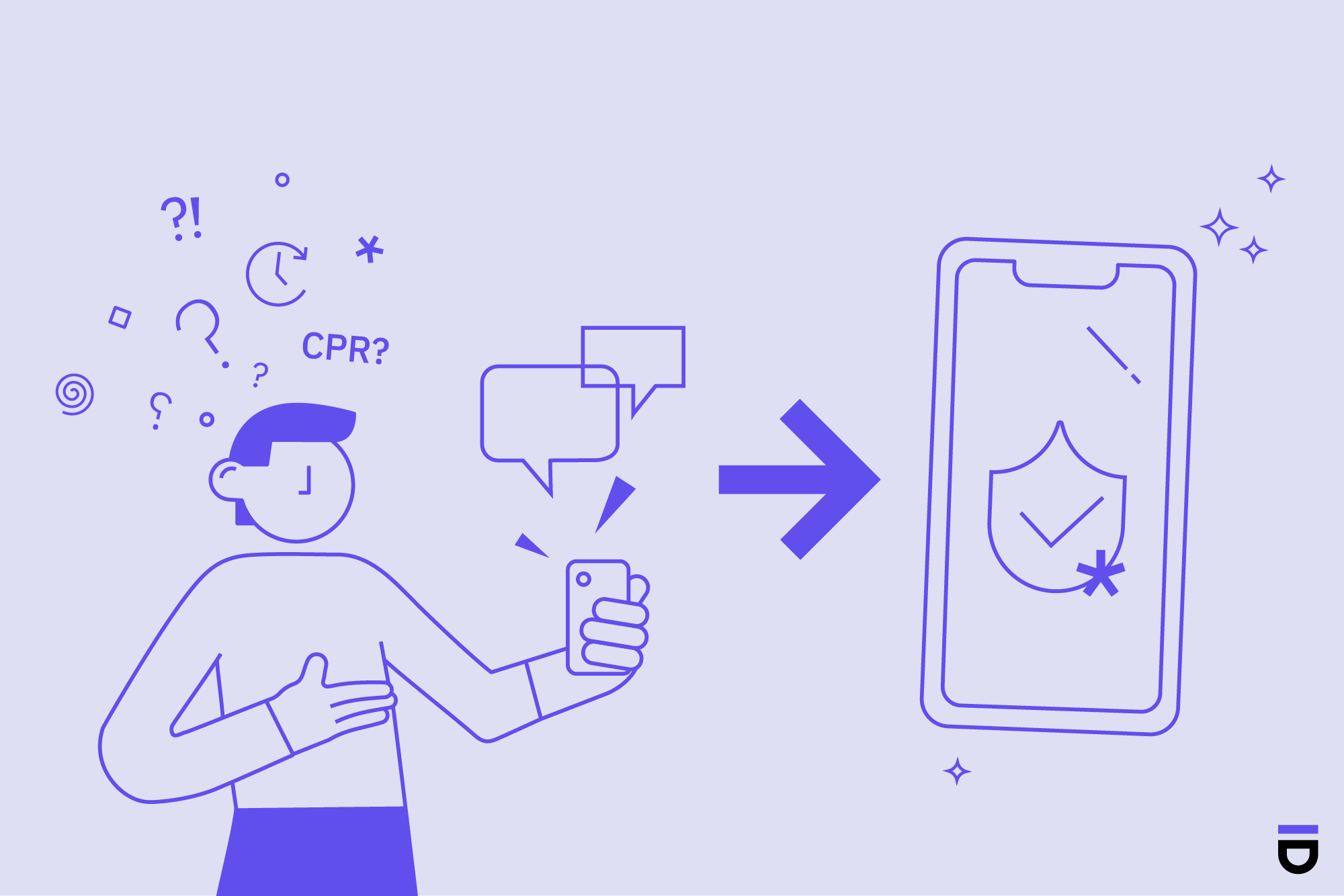
Even though we live in the digital age, phone calls haven’t exactly disappeared.
Whether you’re a bank, an insurance company, or a healthcare provider, your customer service likely still handles thousands of calls a year.
And when a call comes in, your agents often need to verify the caller’s identity.
Traditionally, this took the form of security questions (“What’s your pet hamster’s mother’s maiden name?”).
Not only are such methods inconvenient for everyone involved, but they’re increasingly prone to fraud.
Fortunately, there’s a better way: eID-based caller authentication.
Instead of answering questions, customers can verify themselves directly on their own device, often well before they even get through to an agent.
Let’s take a look at the many ways caller authentication can improve things for your company.
1. More productive calls
This is perhaps the most obvious benefit.
The less time your agent spends on identity verification, the more time they have to actually help the customer.
Switching to eID-based caller authentication can shave 1-2 minutes off every customer call.
The result? More customer issues successfully solved with less time wasted.
Not only that, but customers will be less likely to abandon the call in the first place, which brings us to…
2. Happier customers
Let’s face it: None of us enjoy verbally reciting personal details over the phone.
Traditional methods force customers to remember precise answers to obscure security questions.
Even worse, customers can only begin to authenticate themselves when they first get through to an agent, potentially after minutes of wasted hold time.
Now imagine a scenario where a customer can self-authenticate while on hold using a familiar eID verification process? This makes waiting time actually productive and less of an annoyance
Not only that, but eID caller authentication streamlines the process across every touchpoint: Whether the customer logs in online or calls you, they use the same method.
All of this leads to a better experience for the customer with way less friction.
3. Happier agents
But it’s not just the customers who benefit.
Call centers are notorious for high turnover rates.
Your agents already have their hands full memorizing call scripts, learning internal procedures, and so on.
Verifying caller identity becomes yet another thing on their long list, and arguably one of the most sensitive. Did the answers match our records? Is it really the customer on the other end?
Having to be responsible for customer verification can easily add unnecessary stress, especially for new and inexperienced staff.
With caller authentication, the standard eID process handles everything. The agent simply sees a confirmation dialogue and is free to move on to helping the customer.
4. Stronger fraud protection
Here’s an uncomfortable truth: Traditional verification approaches may, counterintuitively, make your business more prone to fraud.
Social security numbers can end up in mass data leaks. Customers’ addresses are often public knowledge. And “secret” questions are typically easy to research or even guess.
As if that wasn’t enough, savvy fraudsters can use social engineering tricks to bypass the customer service agent altogether.
eID-based authentication works differently.
National eIDs are, by definition, tied to the customer’s verified identity and protected by biometrics or other authentication on their personal device.
They can't be guessed, stolen from a database, or talked out of an agent.
Most eID-based caller authentication includes built-in scam protection that asks the user to confirm they actually called the company.
While not 100% flawless, eID caller authentication eliminates most common sources of fraud, making your business that much safer.
5. Higher trust
As cliche as it may sound, trust is a two-way street.
Thoroughly vetting your callers not only helps your company prevent fraud, it also signals to the customer that you’re taking security seriously.
People are all too familiar with phone scams and fraudsters impersonating insurance companies or government agencies. Using eIDs for caller authentication puts the customer’s mind at ease and confirms they’re dealing with a legitimate company.
In a world where everyone is bombarded with “I’m calling on behalf of your bank” scams, this kind of two-way trust can make a huge difference.
6. Better compliance
Regulations around data handling are becoming increasingly strict.
From GDPR to KYC, they all place an obligation on businesses to responsibly collect, store, and use personal information.
Introducing eID-driven caller authentication is an easy way to tick many of the required boxes.
First, without security questions and answers, your company won’t be storing as much sensitive data to be stolen or leaked.
Second, digital verification may in some cases create an automatic audit trail for potential regulatory review.
Third, for high-risk industries where more robust customer authentication is a must, eID meets these higher standards right out of the box.
Government-backed eID authentication is by default designed with compliance in mind, so piggybacking on such frameworks can make it easier to stay compliant.
Ready to make your service calls safer and simpler?
Caller authentication is already available with Norwegian and Swedish BankID, with the Danish MitID coming soon.
Start testing for free today or contact our sales team to learn more.

-2.png)