Why Identification Is Not The Same As Verification
By Daniel Gniazdo on 13 April 2026
Call center agents need to know who’s on the other end of the line.
That’s why businesses typically ask callers to identify themselves.
To do this, a person might be asked to provide their national ID number or to answer a security question.
The problem is that while many of these approaches may help identify the person, they are rarely enough to verify their identity.
To understand why that is, let’s take a closer look at the difference between identification and verification.
What is identification?
Identification is all about matching a person to an existing customer.
It answers the question: “Which customer is this?”
In a call center, an agent might ask the caller for any identifier that helps pull up their customer record: an email address, the last four digits of a credit card, a customer ID number, and so on.
This works for quickly finding the right customer, but it does nothing to assure the agent that the person calling is actually that customer. That’s because information needed for identification, including answers to security questions, can be overheard, inadvertently shared, or stolen.
As such, anyone could use something like your national ID number to impersonate you on a call.
That’s exactly how identity fraud often works.
And that’s exactly why verification is so important.
What is verification?
Verification involves confirming that the caller is, in fact, the identified customer.
The process relies on methods that are less susceptible to exposure, such as one-time passwords or voice biometrics.
The caller must prove they are who they claim to be beyond simply knowing the right details about the customer.
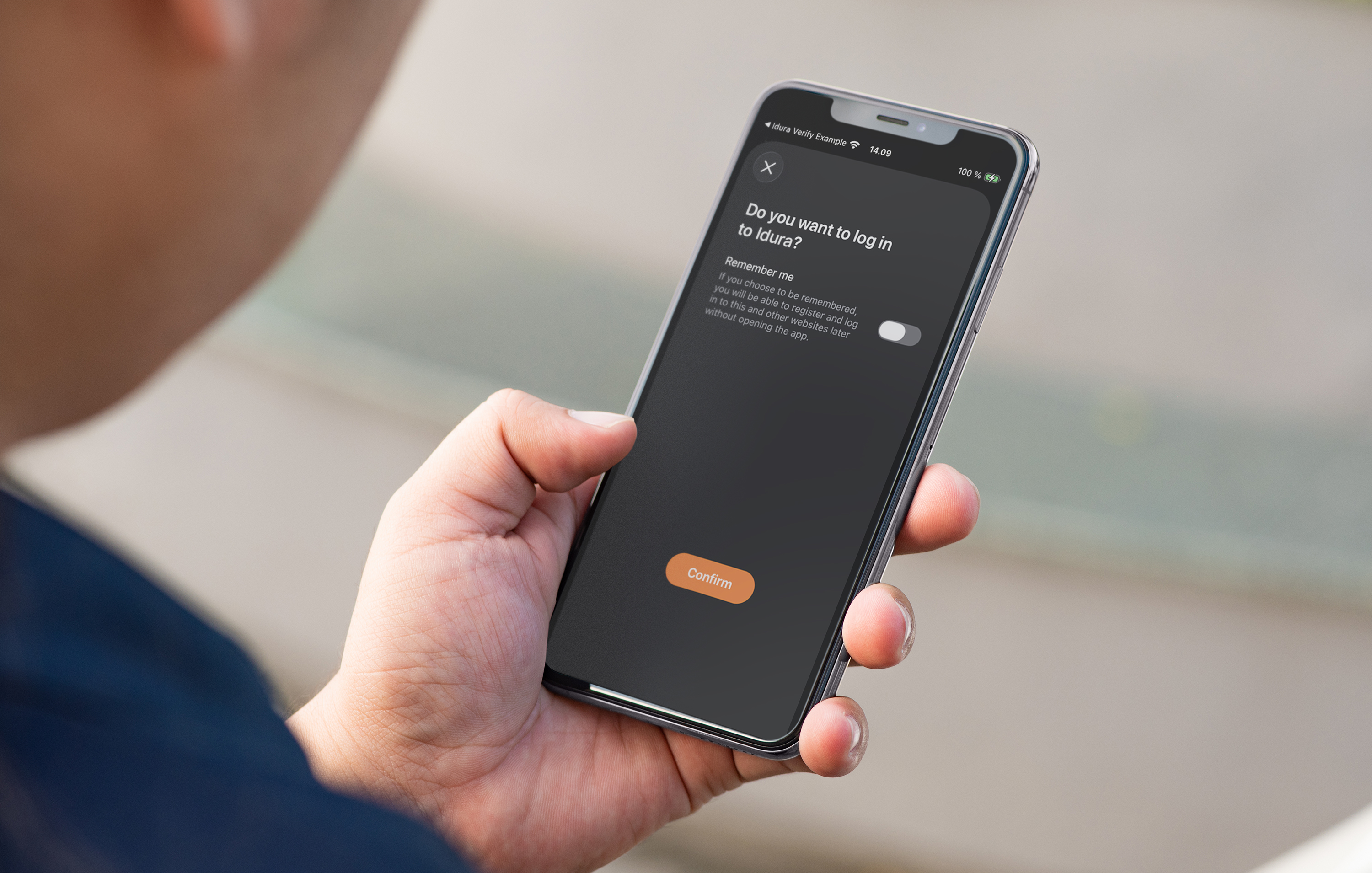
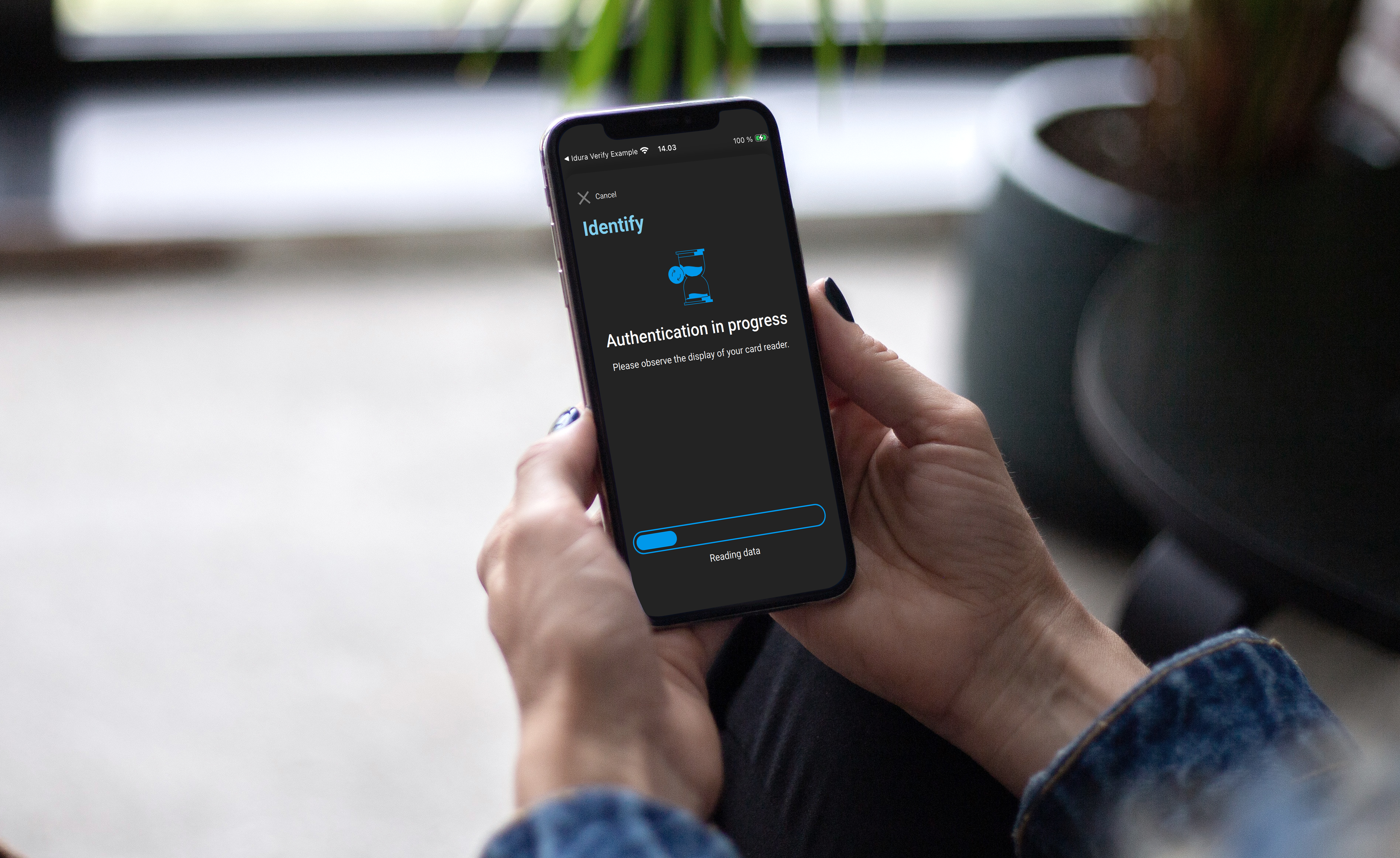
One of the most reliable ways to do that is to let the caller authenticate with their national eID via an app on their device.
Compared to other verification methods, eID-based caller authentication provides the best mix of security, fraud resistance, and user experience.
Why are they often confused?
The two terms are often conflated because, historically, knowledge-based authentication was seen as an acceptable way to verify someone’s identity.
That’s why you can still find companies relying on things like security questions or national IDs to verify callers.
But times are changing, and knowledge-based authentication on its own has become unreliable for verification purposes. In practice, it’s often paired with additional verification methods in what’s known as multifactor authentication.
Here’s a useful test: Could someone else easily provide the same information instead of the actual customer? If the answer is yes, you’re dealing with identification. But if the step also requires something the customer has or is, we’re talking about verification.
Why the difference matters
If your organization still treats identification as verification, you risk granting any caller with the right information access to someone else’s account and sensitive data.
Fraud is already at an all-time high, and AI is only making it worse. As such, letting identification stand in for verification is increasingly indefensible.
The solution isn’t to forego national IDs or other customer identifiers altogether. They’re still useful for matching callers to the right customer details.
But you should always supplement identification with an extra verification step.
Not only are such measures often required by regulations, but you owe it to your customers to introduce secure methods of verifying a caller’s identity, such as eID-based caller authentication.
Where does “authentication” fit into the picture?
“Verification” and “authentication” are frequently used interchangeably to describe the step of confirming someone’s identity.
If you want to be pedantic about it, there is a slight difference between the two: Verification is typically a one-off event that happens when a customer first registers an account. Authentication is a recurring step that happens every time a user logs on to access a service.
But in the context of a phone call, that distinction is mostly semantic: The agent will always need to confirm who the caller is, regardless of whether you call it verification or authentication.
The real takeaway is that identifying a customer does not automatically equal verifying (or authenticating) them. Verification requires more robust and secure approaches.
Ready to make your service calls safer and simpler?
Caller authentication is already available with Norwegian and Swedish BankID, with the Danish MitID coming soon.
Start testing for free today or contact our sales team to learn more.

-2.png)